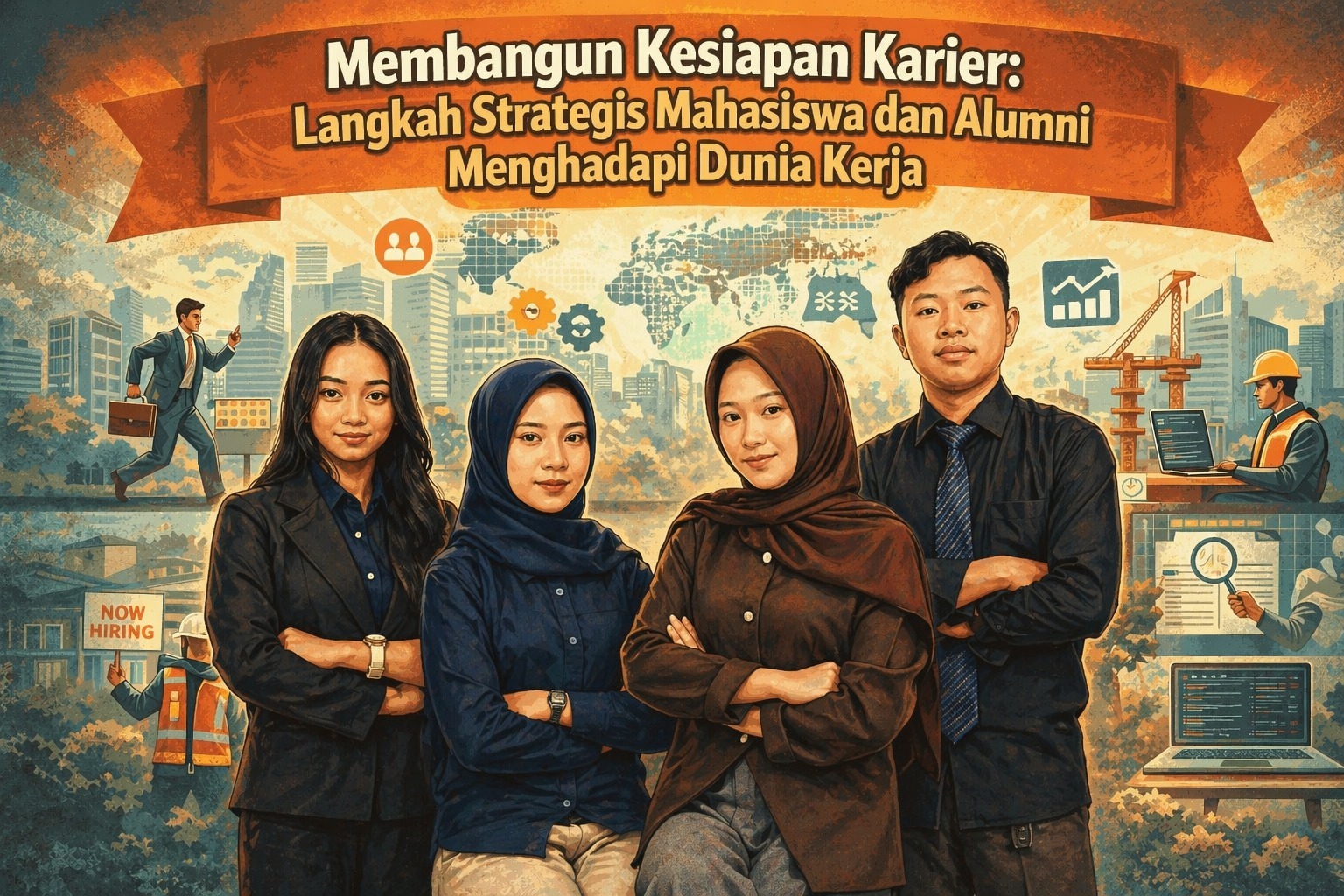
Entering the work world is not just about getting the first job, but about how one is able to adapt, evolve, and contribute to a real, real environment. For students and alumni, this stage is often an important moment that determines the future. Not a few feel they're ready to have an education degree,
This article aims to give a more comprehensive picture as well as practical guide to students and alumni in preparing for a more mature and directional work world.
Understand the real world of work.
The environment has different characteristics than the college world. If during college students focus more on theories and academic tasks, then in the world of work first is results, responsibilities, and performance.
Many new graduates had difficulty at the beginning because they had to adapt to various demands, such as working in different teams, facing strict targets, as well as solving problems quickly and accurately. It shows that the readiness of work doesn't simply depend on academic value, but it also includes mental readiness and adaptability.
Recognize Self Potential as The First Step
The first step in preparing for a career is understanding yourself. Students and alumni need to know the interests, abilities, and goals they want to achieve in their careers.
A simple question like:
- What field do I like the most?
- What skill is my superiority?
- What kind of work do I want in the future?
can help determine a clearer direction. With this understanding, one will focus more on developing themselves and not easily affected by other people's choices.
Collecting Experience Since this
Experience becomes one of the most important aspects that companies often consider. Therefore, students shouldn't wait for graduation to start looking for experience.
Some ways that can be done among others:
- Follow the internship program or practice
- Active in college organizations
- Involved in project or competition activities
- Taking a side job or freelance
Through that experience, students can train practical skills and understand real conditions in the workforce.
Balancing Technical and Non-Technical Abilities
In a professional world, success is not only defined by technical ability, but also by the ability to interact and work with others.
Technical capabilities (hard skills) includes skills that correspond to studies, such as software mastery, data analysis, or other special skills.
Meanwhile, non-technical capabilities (soft skills) covering:
- Effective communication
- The ability to work in teams
- Time Management
- Command
- The ability to solve problems.
The combination between the two will make a person more prepared for various challenges in the workforce.
Build Professional Images Since Dini
In the digital age, it's important for students and alumni to start building professional self-image. It can be done by displaying precise skills, experience, and achievement.
The steps that can be made among others:
- Installing CV and interesting portfolio
- Active on a professional platform
- Divide work or experience
- Following activities that support self-development
A good professional image will increase the opportunity to be known and trusted by the workforce.
Expand Relations and Chance
It has vast networks that can open various career opportunities. There's a lot of work information or job opportunities that are obtained through relationships.
Students and alumni can start building networks in a way:
- Following a seminar and training
- Join the community or the organization
- In good terms with the professor and alumni
Relations built early can be an important investment in the future.
Continue to study and adapt
Technology development and industrial change demand every individual to continue learning. The workforce is not static, so the ability to adapt becomes very important.
Students and alumni need to have a learning spirit along the way:
- Following extra training
- Learn new skills
- Open to change
- Dare try new things
With this attitude, one will be easier to deal with change and be relevant in the workforce.
Final Destination: Being a Ready-to-Work Graduation · Global Voices
The main goal of education is not just to get a degree, but to become an individual ready to contribute to the workforce. It includes skills, experience, and professional attitude.
Students and alumni who are ready are the ones who:
- Understand her potential
- Have appropriate skills
- Experience and adaptive
- Being able to work professionally
- Have the spirit to keep growing